
Room 1
This first room holds 27 poems. They explore journeys of diaspora, arrival, distance, and fraught migration. These works reflect the experiences of the students as newcomers grappling with decolonization in Canada. The voices carry histories from many places while beginning to understand what it means to live on Indigenous Lands.
There is no single interpretation of these poems. Instead, allow yourself to notice what emerges for your personally. It may be a word, a silence, a feeling, or a question that stays with you.
For the in-room experience, play the audio below. It is a soundscape that captures the poems’ creation. We hear markers moving across paper, the pressure of each stroke, and pages turning. These sounds remind us that understanding is a process of listening, questioning, and becoming.
Poems 1 to 3: Time You Can Never Return To
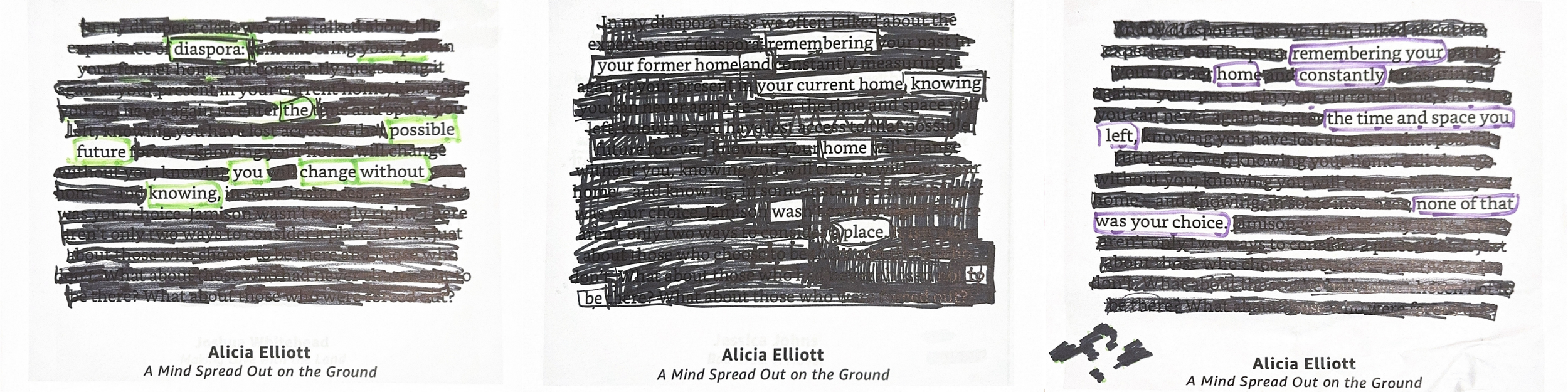
Drawn from Alicia Elliott, these poems open with diaspora as constant remembering of a home and time you can never return to, a loss that was "none of [your] choice."
Poems 4 to 6: Memory Without Borders
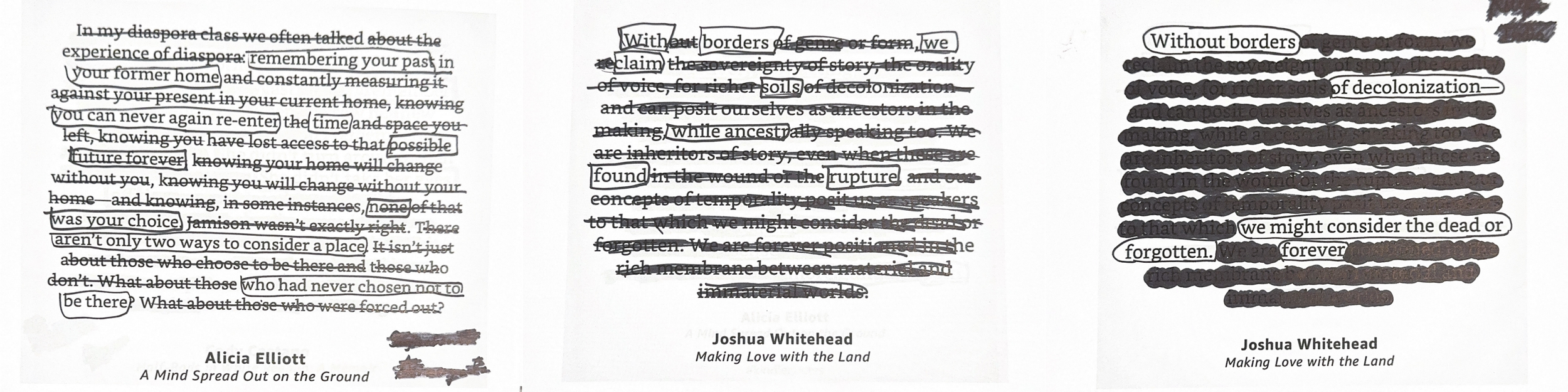
Moving from Elliott to Joshua Whitehead, these poems shift from forced displacement to reclaiming land, ancestry and memory "without borders."
Poems 7 to 9: Self as Ancestor and Inheritor
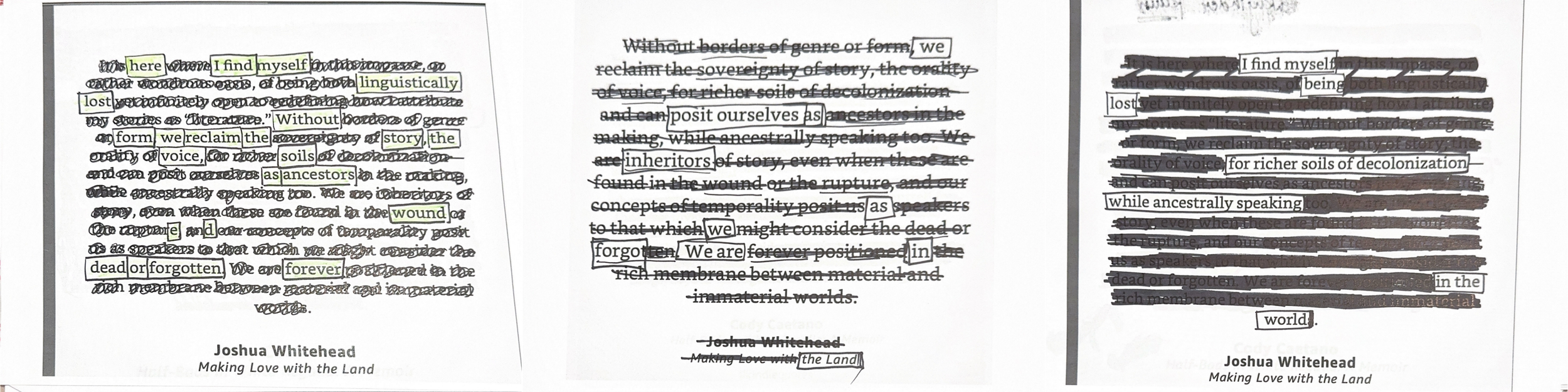
Through Whitehead's words, being "linguistically lost" becomes a way of finding oneself, with the self rooted as an ancestor and inheritor in "richer soils of decolonization."
Poems 10 to 12: Deliberate Work of Repair
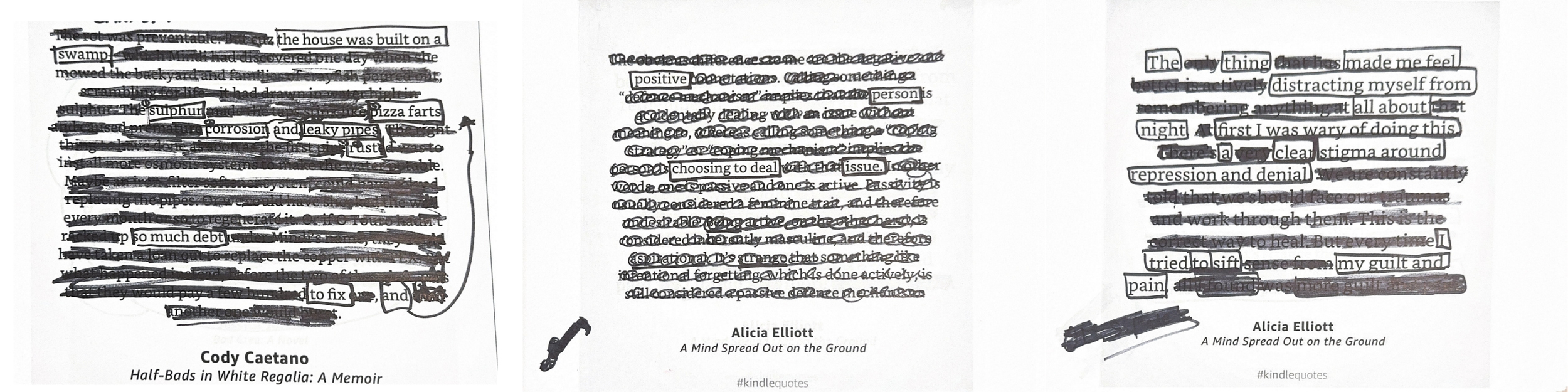
A house "built on a swamp" (Cody Caetano) sits beside Elliott's reflections on choosing to cope. Inherited damage and debt are set against the slow, deliberate work of repair.
Poems 13 to 15: Circling and Cycling Guilt and Pain
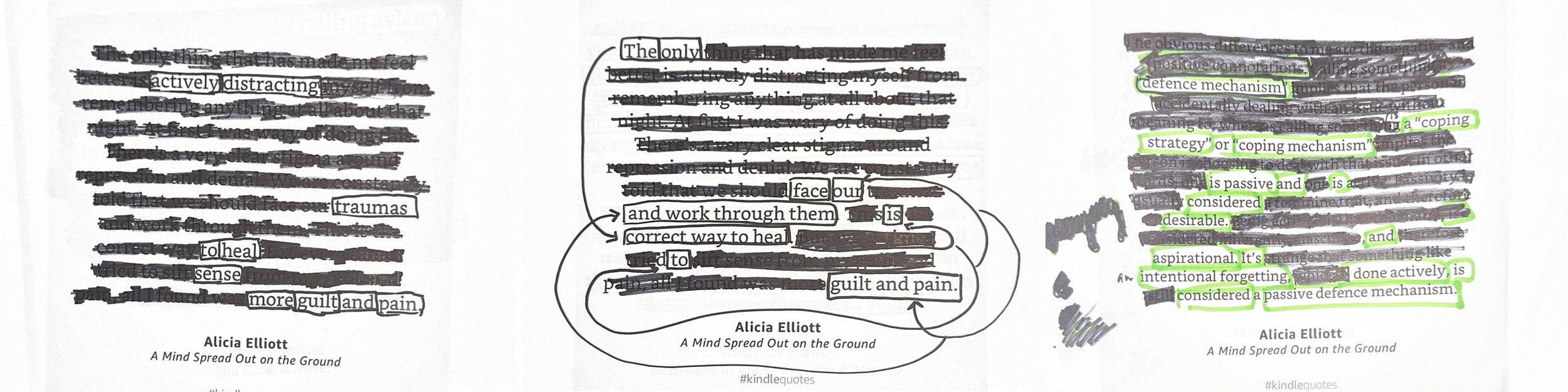
Returning to Elliott, these poems circle (sometimes literally, with looping arrows) through distraction, repression and the "correct way to heal." They show healing as a cycle of guilt and pain, not a straight line.
Poems 16 to 18: Into the Night and Onto the Land
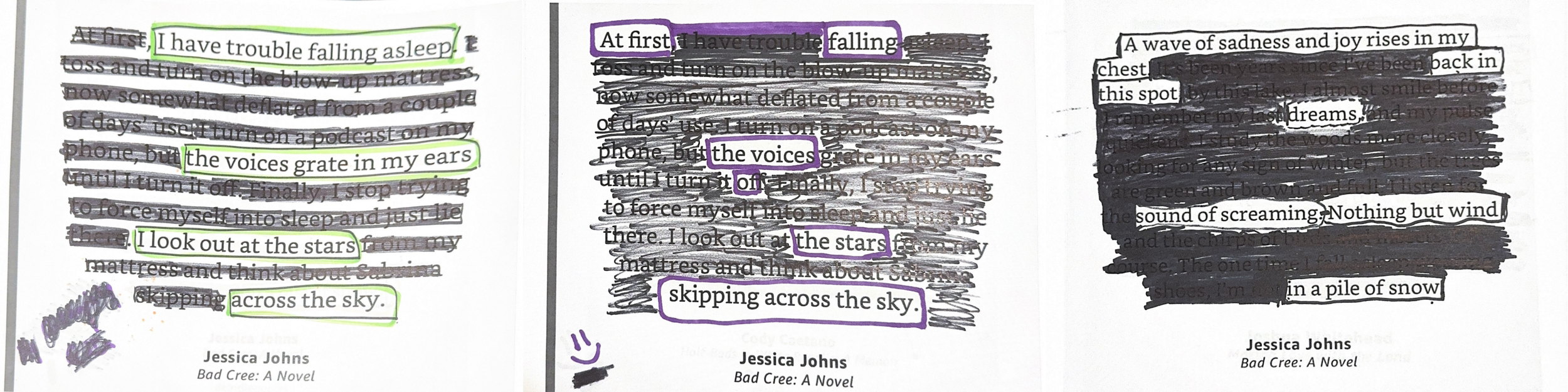
Jessica Johns's Bad Cree carries the room into night, from sleeplessness and grating voices to stars "skipping across the sky." It ends in a wave of "sadness and joy" on returning to the land.
Poems 19 to 21: We Who Reclaim Story
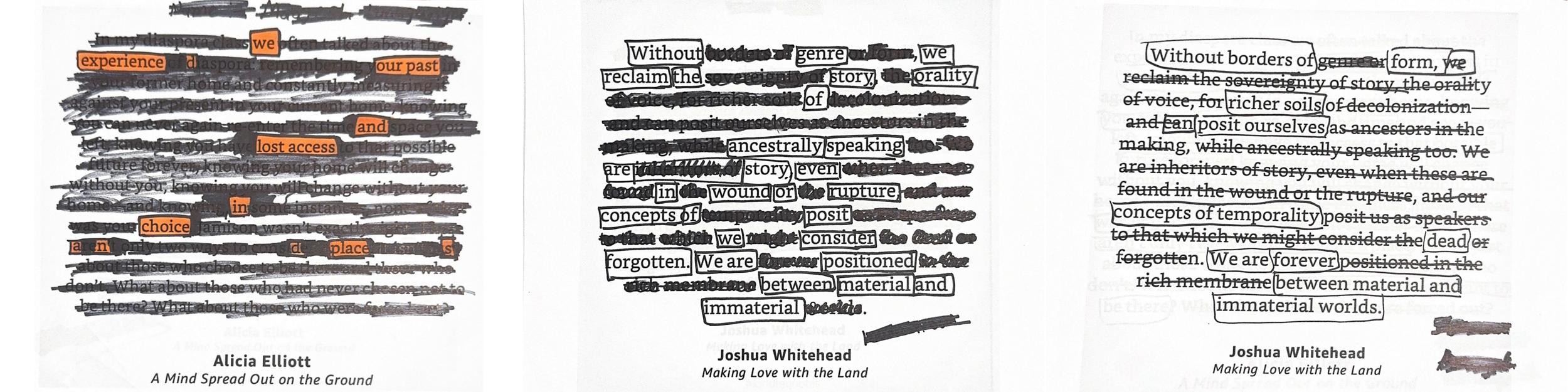
Echoing the opening poems, Elliott's lone "I" becomes a collective "we" who reclaim story and orality and stand "forever between material and immaterial worlds."
Poems 22 to 24: It Was Her Name All Along
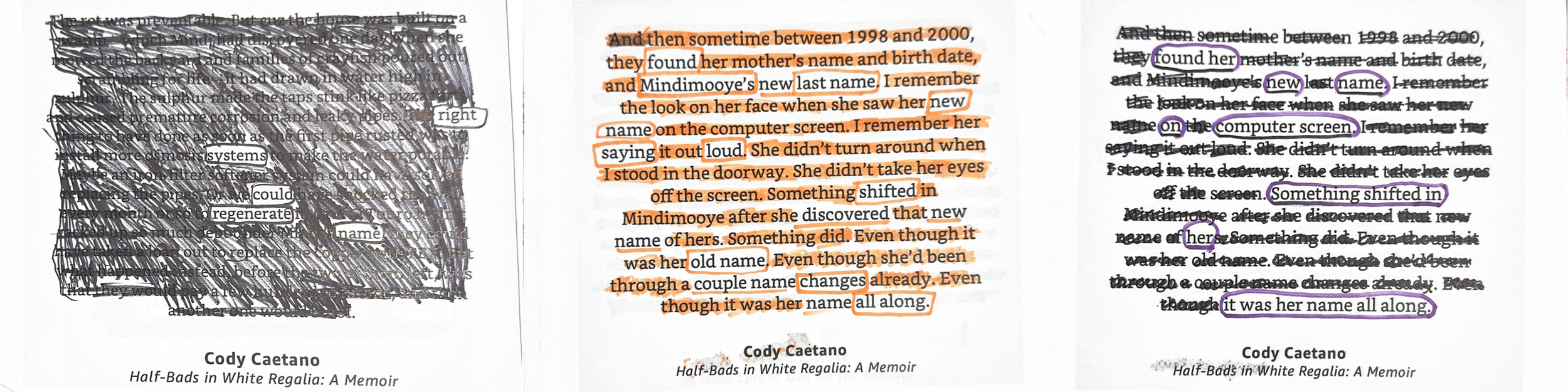
Caetano's memoir turns to naming. A system that "could regenerate" gives way to Mindimooye finding a new name that "was her name all along."
Poems 25 to 27: Forgetting to Better Remember
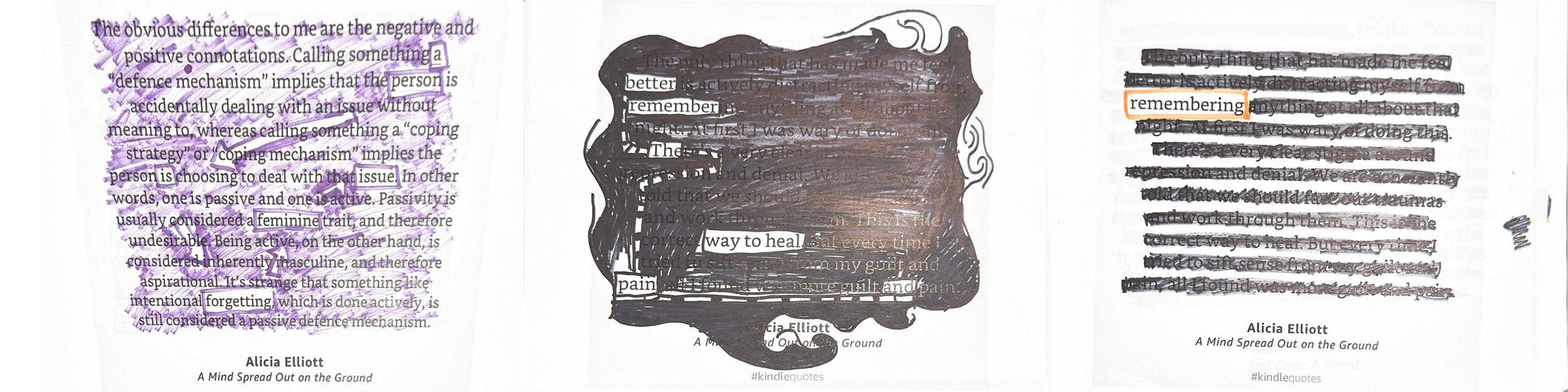
The room ends by moving from "intentional forgetting" to "better remember," and finally to the single word "remembering." Memory is reframed as a "way to heal."
Now on to Room 2, where the conversation deepens from arrival toward responsibility, relationship, and self living on Indigenous Lands.