
Room 2
The poems here shift from experiences of migration toward more direct reflections on kin, spirit, Land, and responsibility. This space focuses on: How do we live ethically in relation to Canada and the people who have always been here?
For many international students and newcomers to Canada – like myself - these questions are unfamiliar. We arrive carrying our own histories of colonialism, displacement, conflict, or migration. Here, those histories meet another history -- the ongoing realities of Indigenous Peoples and Lands in Canada.
These poems do not claim to offer answers. They reveal moments of learning, uncertainty, humility, and transformation in the process of building respectful relationships.
In the poems, the voices overlap with one another. No single voice stands alone. They form a collective conversation and meaning-making, sometimes in dialogue, sometimes uncertain, sometimes in tension, or sometimes unfinished. In this way, the poems describe relationships that are changing, unsettled, and still being formed. Students reflect on how remembering and responsibility can continue in the future.
For the in-room experience, play the backing audio
Poems 1 to 3: Memory in My Blood and Mom’s Hands
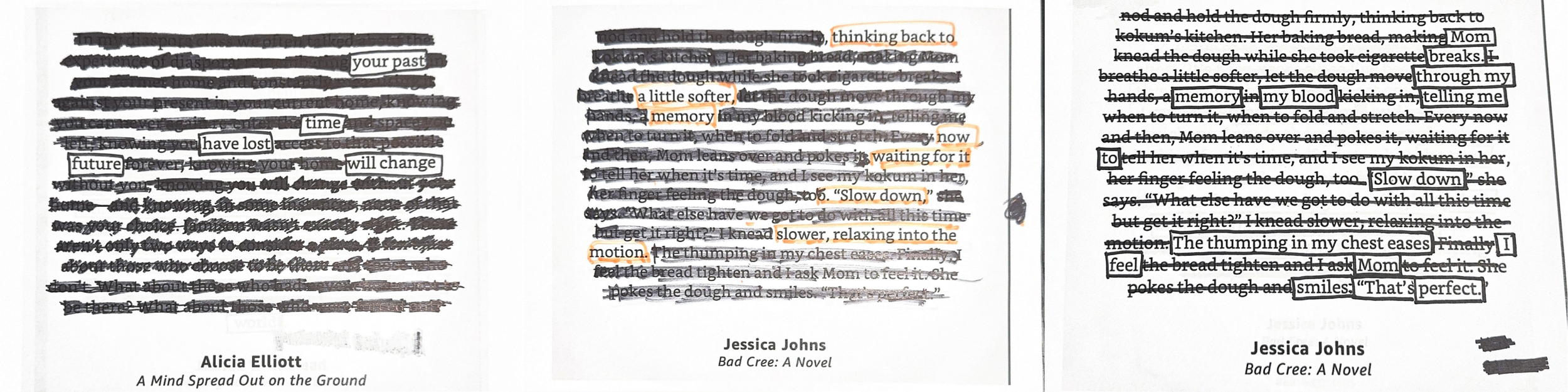
A past lost to displacement (Elliott) is answered by memory "in my blood," kneading bread beside Mom, quietly undoing distance between generations.
Poems 4 to 6: Identity Handed to Those Who Follow
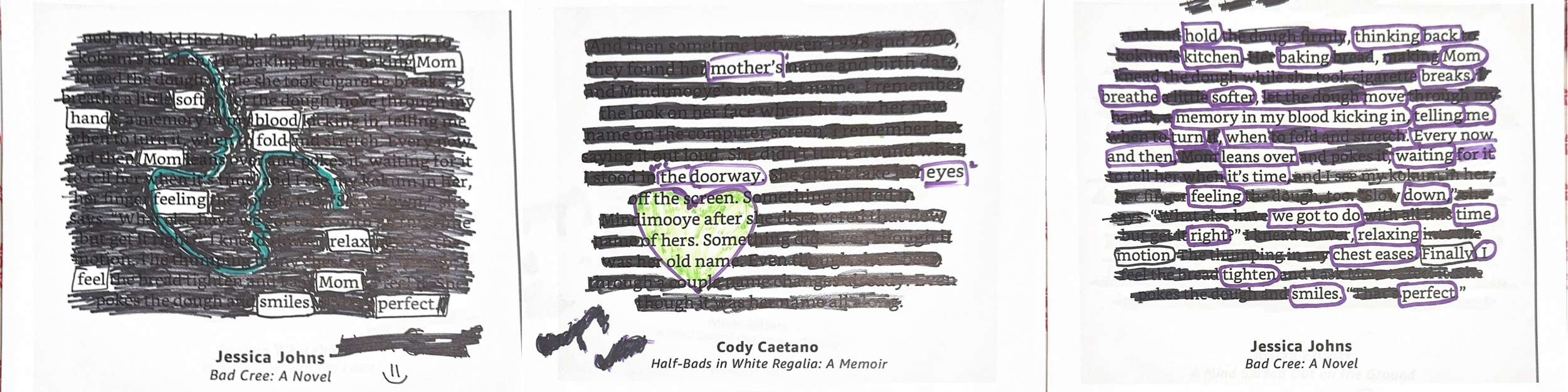
Mothers and grandmothers anchor this grouping of John and Caetano. Through touch, teaching and kin, identity becomes relational, a responsibility handed to those who follow.
Poems 7 to 9: A Lake Holding Sadness and Joy
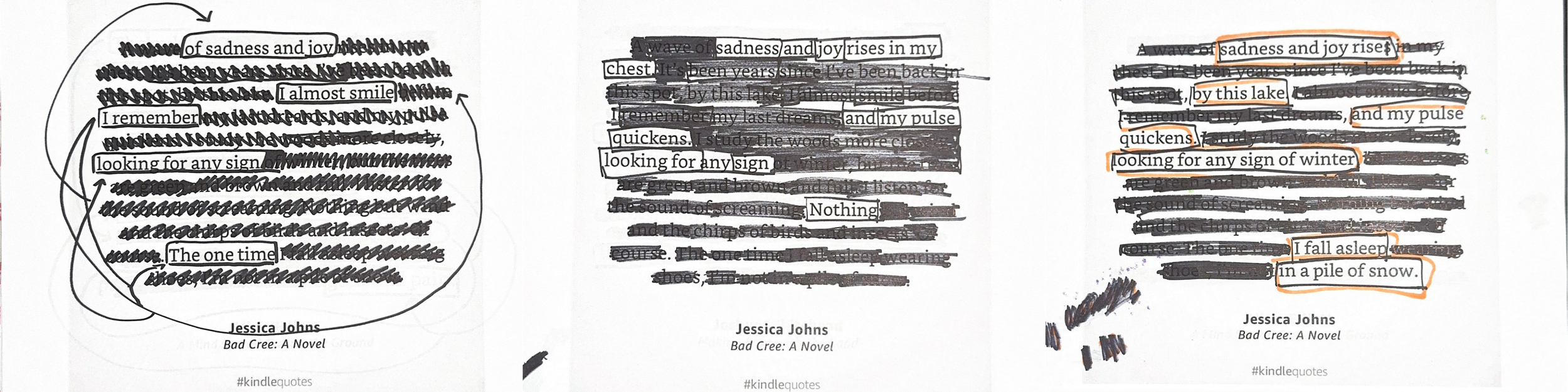
Back "by this lake” in Johns’ work, grief and joy arrive together, and the Land is read for "any sign," as a relative that knows you even after years away.
Poems 10 to 12: Skipping the Sky Home
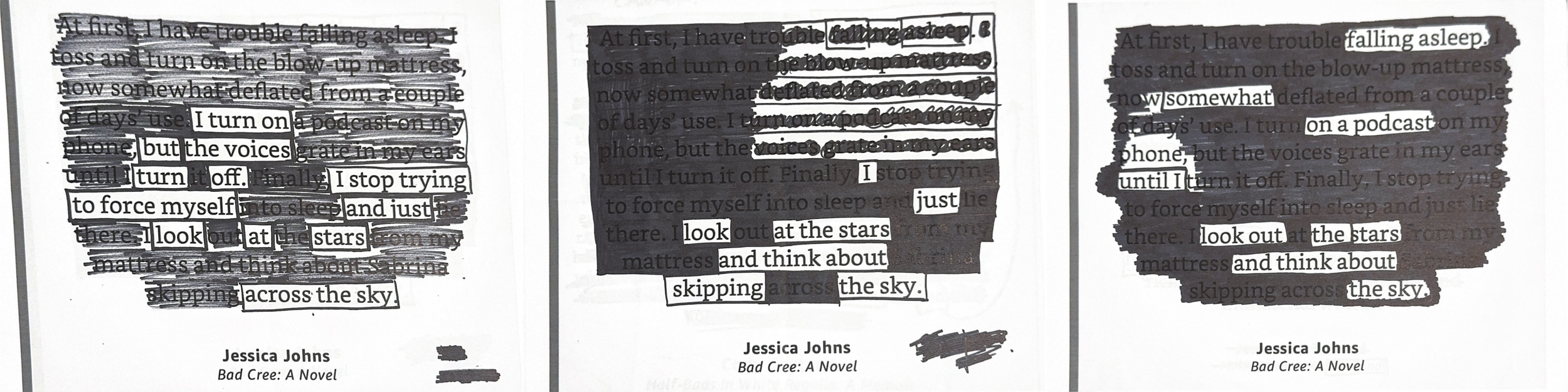
Three erasures of one Johns’ sleepless night hold homesickness and loneliness, softening into surrender and quiet wonder as stars go "skipping across the sky" in the more-than-human world.
Poems 13 to 15: Between Material and Spirit
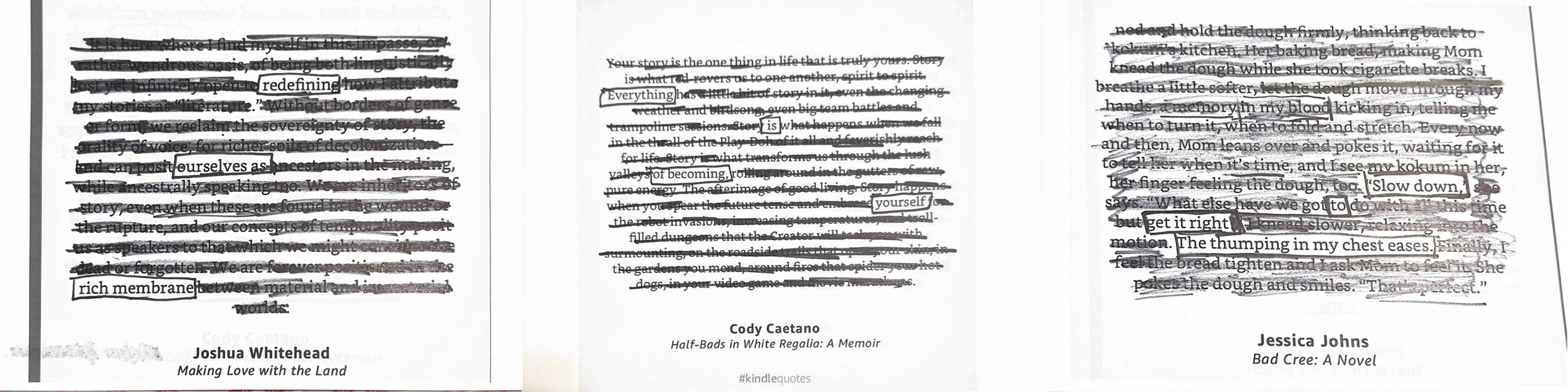
Drawing on three authors, these poems sit in the unfinished work of "becoming yourself," a self understood as relational, "rich membrane" between material and spirit, slowly steadying until "the thumping in my chest eases."
Poems 16 to 18: Sounding Like a Writer
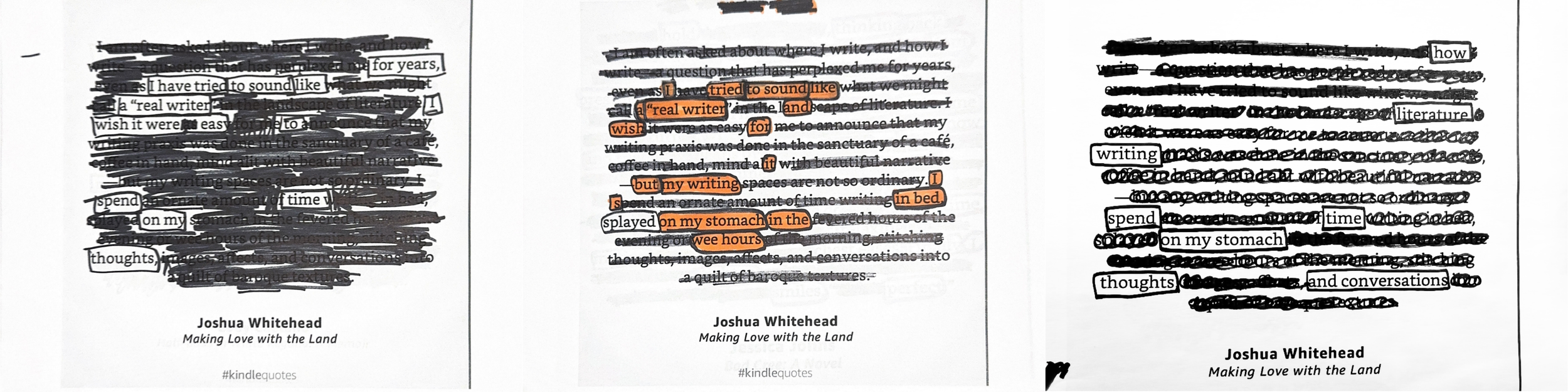
Through Whitehead, these poems carry the weariness of trying "to sound like a 'real writer'" in a colonial "landscape of literature," and the subversion of writing from the body, in bed, during wee hours.
Poems 19 to 21: Stitching Life, Spirit and Fire
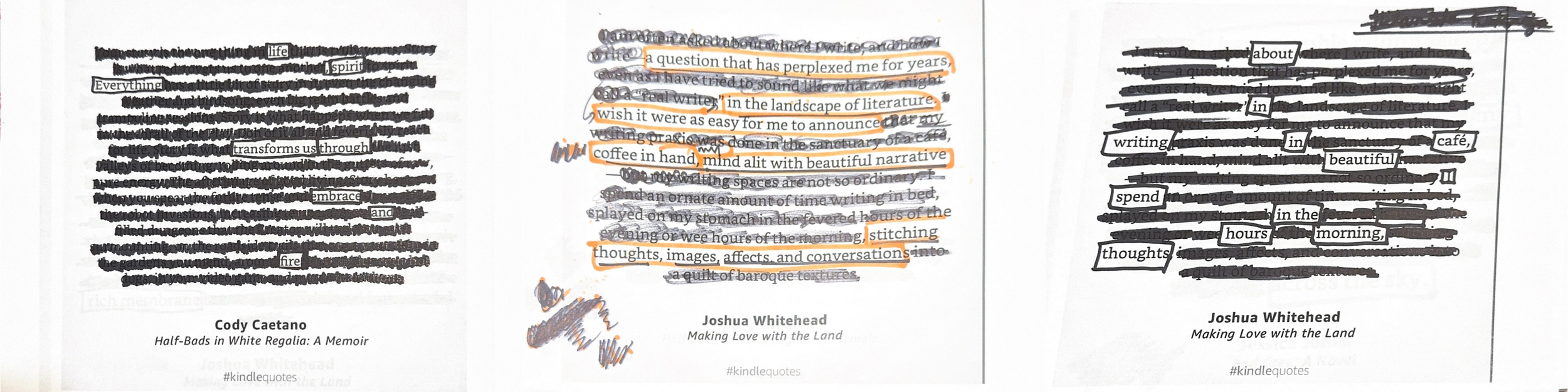
Caetano's "life," "spirit" and "fire" sit beside Whitehead's quiet mornings of writing, where story "transforms us" and becomes the patient work of "stitching thoughts, images, affects, and conversations" back into relation.
Poems 22 to 24: Carrying Stories in Gardens
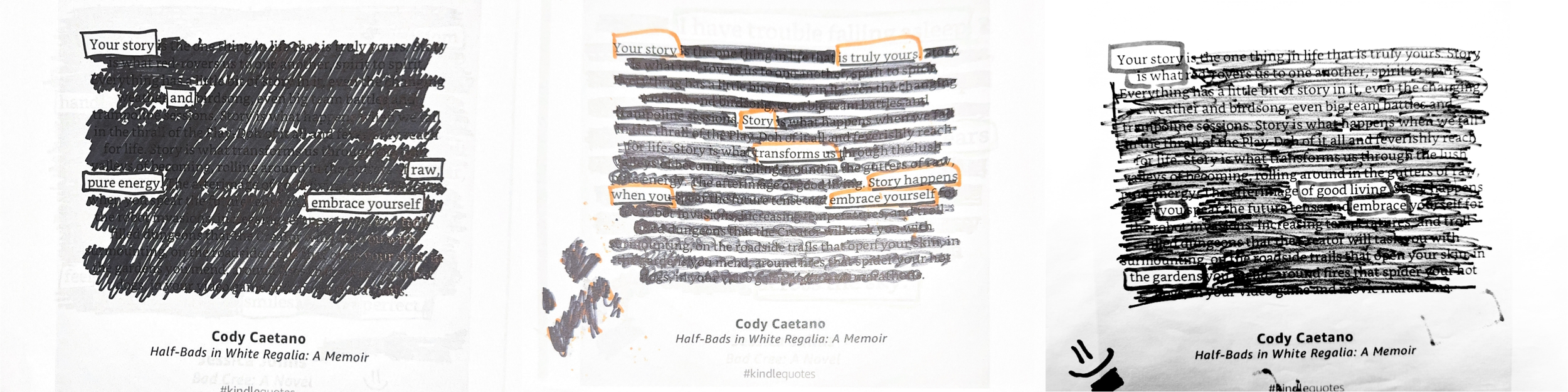
Caetano's "your story is truly yours" registers maybe as celebration, maybe as permission: to embrace yourself, and to carry story in your own gardens
Poems 25 to 27: The Lands Where Dreams can Rest
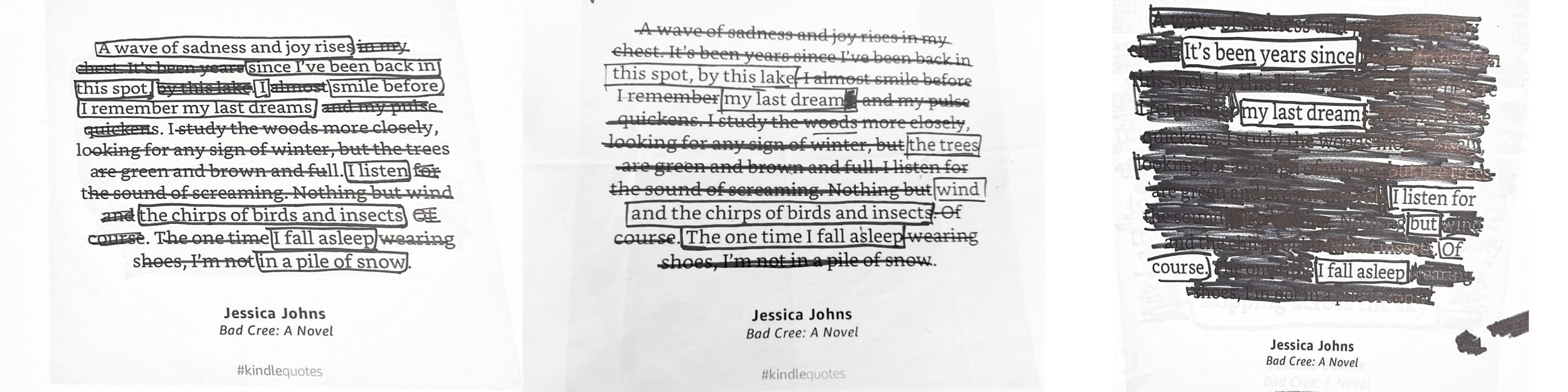
The room closes "back in this spot, by this lake in Johns’ writing," among wind, trees, birds and insects, where dreams rest, held again by the Land, as "I fall asleep."
These poems also ask us to reconsider how international students are often represented. Public conversations frequently reduce them to numbers, labour, housing, or economic contribution. Here, they appear as thoughtful learners engaging with difficult ethical questions about Land, responsibility, and coexistence.
Thank you for taking the time to read reflect, and remain open to moments of connection, curiosity, and discomfort along the students and us. We hope that the conversations begun here continuing to unfold long after you leave this space.
We now invite you to move from listening to creating, from reflection to engagement in Room 3.